.png)

Sacroiliac Joint Dysfunction: Is this the cause of your low back, hip or buttock pain?
The human body is complex and requires multiple systems and parts to work in conjunction with one another. So, when you feel pain in one area, it may not necessarily be coming from where you think. Rather than see pain, treat pain; it is important to investigate and understand why you’re in pain and where it’s stemming from.
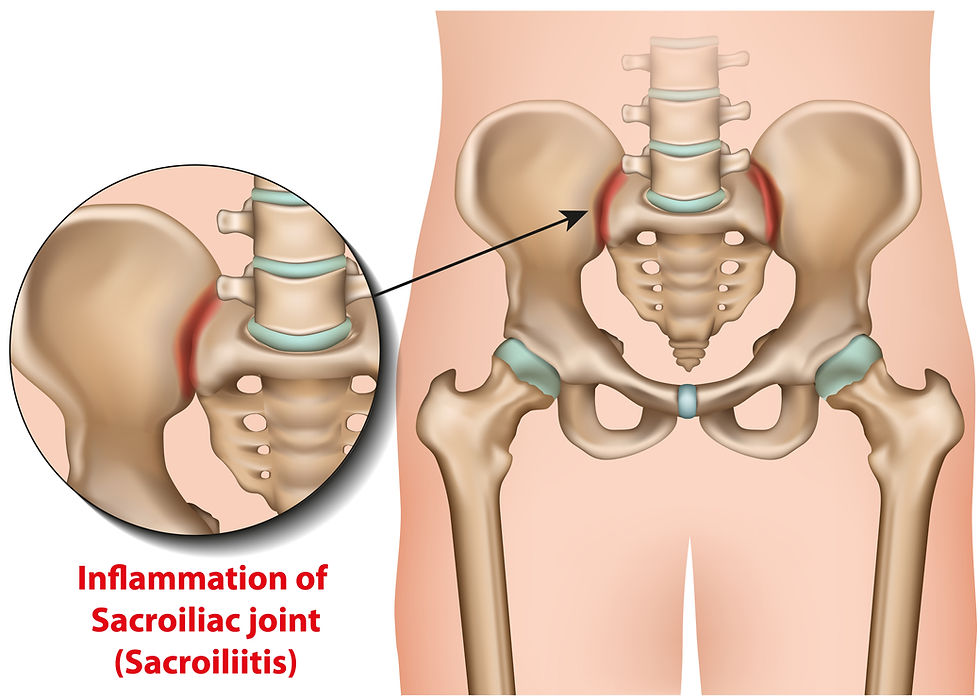
One of the most common examples of this is when it comes to sacroiliac joint (SIJ) based pain. The SIJ is the center-point of the body, where the bottom of the spine (sacrum) connects to your pelvis (ilium). It is a structural joint, meaning it is built to take load and absorb force, rather than help you move. The joint is supported by multiple ligaments and muscles that surround the lumbar and pelvic region. As you have two sides to your pelvis, there are two SI joints.
Signs and Symptoms
The tricky part with diagnosing SIJ pain is the fact it can create symptoms in various other places. Some of the most common signs and symptoms of SIJ pain are:
Sharp localised pain over the SIJ
Dull ache through the buttock, hip and/or thigh
Lumbar based aching or discomfort
Nerve pain (radiating, numbness or tingling) down the leg
Tightness in the gluteal muscles, low back or hip flexors
Recent evidence suggests that up to 27% of low back pain can originate from the SIJ.
Causes
The causes of SIJ pain vary from patient to patient. Some of the most common ones seen at 4 Life Chiropractic are:
Degeneration/arthritis due to aging and loss of strength and stability to the SIJ.
Repetitive load issues- labor intensive work with repetitive bending/twisting.
Poor lumbar and hip biomechanics- poor low back mobility or limping can result in excessive force being put through the SIJ’s.
Weakness or unequal strength through the core, glutes and surrounding hip muscles.
Trauma to the area- this includes motor vehicle accidents and falling from heights.
Pregnancy- the release of relaxin hormone throughout pregnancy to prepare for childbirth results in the reduced strength and rigidity of ligaments and muscles throughout the pelvis.
Management
The best time to treat SIJ pain is sooner rather than later. If left unmanaged, chronic inflammation can occur and result in sacroiliitis. Here at 4 Life Chiropractic, we go through the following stages to diagnose, relieve and manage SIJ pain:
Diagnosing your back pain
Firstly, a thorough history is taken. This allows you to fully explain your pain and any possibilities as to how it may have begun. A series of questions then provide your practitioner with more information on the appropriate tests and examinations to perform.
A physical examination is then performed to identify where your pain is located and understand why this is happening. For SIJ pain, this involves specific tests such as distraction, compression, thigh thrusts and Gaenslen’s. These tests help differentiate SIJ pain from other low back complaints, as well as helping identify why your SIJ is sore.
Further investigation can be ordered if required. Your practitioner may request further imaging or investigation if they believe there are some underlying causes, or to assess the extent of the issue.

Treatment
Options vary depending on the underlying issue, current pain levels and patient type. Your practitioner will create a tailored treatment plan to alleviate pain and prevent the recurrence of injury. Below are some of the ways we can help with SIJ pain.
If from overuse or strain, it is important to release the surrounding muscles that may be in spasm. Soft tissue modalities such as massage, trigger point and dry needling can target muscles through the low back and hips to relieve the spasm and tightness that may be present.
If caused from instability or weakness around the SIJ, a specific exercise program is created. This involves progressive exercises that focus on core, glute and surrounding hip musculature, which provide the SIJ with more stability and support to perform day to day tasks.
Joint mobilization can be performed throughout the lumbar and pelvic region if the SIJ is being overloaded due to biomechanical issues. Making sure both sides of the body are working in conjunction with one another.
If you can take home one message from this blog, it would be that the body is both amazing and confusing. The details on SIJ pain are a clear example of this. If you or somebody you know is suffering from low back pain, it is better to get it checked out by a trained professional to get the correct diagnosis and treatment options.
By Jake Black
Chiropractor


Comments